Pearls have long captivated humanity with their iridescent beauty, but their delicate nature poses significant challenges for preservation. Unlike gemstones formed from minerals, pearls are organic creations, primarily composed of calcium carbonate and conchiolin. This biological origin makes them exceptionally vulnerable to environmental factors, particularly humidity and pH levels. Recent scientific advancements have unveiled sophisticated methods to extend the lifespan of these treasures by meticulously controlling their surroundings.
The organic matrix of a pearl is inherently unstable. When exposed to fluctuating humidity, pearls can lose their natural moisture, leading to cracks and loss of luster. Conversely, excessive moisture encourages fungal growth and structural degradation. Scientists have determined that maintaining a relative humidity between 50% and 60% creates an ideal environment. This range prevents desiccation without promoting microbial activity, effectively putting the pearl in a state of suspended animation where deterioration processes are dramatically slowed.
Advanced preservation systems now utilize microprocessor-controlled hygrometers connected to humidification and dehumidification systems. These devices maintain constant humidity levels within display cases or storage containers, creating a stable microclimate. Museum conservators have pioneered the use of silica gel and other buffering materials that automatically absorb or release moisture as needed, providing passive protection that doesn't require electrical systems. These methods represent a significant leap from traditional preservation techniques that offered inadequate protection against environmental fluctuations.
The pH environment surrounding pearls proves equally critical to their longevity. Pearls begin their existence in the slightly alkaline waters of their host oysters, typically at pH levels between 7.5 and 8.4. When exposed to acidic conditions, the calcium carbonate that forms their structure begins to dissolve, leading to surface pitting and eventual structural failure. Even weak acids present in human perspiration or atmospheric pollution can cause cumulative damage over time.
Cutting-edge preservation technology addresses this vulnerability through pH-controlled environments. Specialized display cases incorporate pH-buffering materials that maintain a slightly alkaline environment neutral to the pearl's composition. Some institutions use calcium carbonate substrates that naturally stabilize the surrounding pH. For storage solutions, scientists have developed archival-quality materials that are pH-neutral and acid-free, preventing any chemical interaction that might damage the organic gemstones. These measures effectively create a miniature replica of the pearl's original oceanic environment.
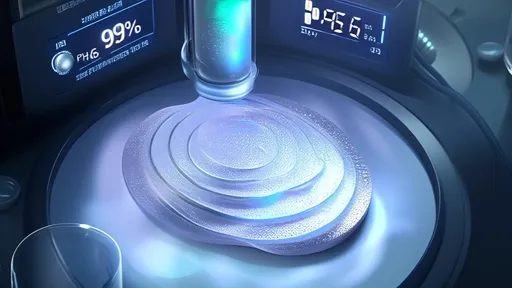
Perhaps most impressive are the integrated systems that combine humidity and pH control. These advanced preservation units constantly monitor both parameters, making automatic adjustments to maintain optimal conditions. Sensors detect minute changes and trigger responses—whether adding moisture, removing excess humidity, or releasing pH-stabilizing compounds. The technology has become so precise that it can differentiate between various types of pearls, from Akoya to South Sea varieties, each requiring slightly different ideal conditions based on their specific composition and nacre thickness.
The implications of these preservation techniques extend far beyond museum collections. Luxury retailers now implement these technologies in their displays, recognizing that proper environmental control maintains the value and appearance of their inventory. Collectors and investors are increasingly using similar systems for private collections, understanding that proper preservation protects significant financial investments. Even auction houses have adopted these methods, ensuring that pearls maintain their condition throughout the valuation and selling process.
Looking toward the future, researchers are developing even more sophisticated approaches. Nanotechnology offers promising advances, with protective coatings measured in molecules rather than millimeters. These invisible barriers would shield pearls from environmental factors while remaining completely undetectable to the eye. Other scientists are experimenting with controlled atmosphere storage, replacing the air around pearls with inert gases that prevent any chemical reactions. The continuing evolution of preservation science ensures that future generations will be able to appreciate these organic gems in their full glory.
The marriage of scientific understanding and technological innovation has revolutionized pearl preservation. What was once considered inevitable deterioration is now largely preventable through environmental control. As research continues to refine these techniques, we move closer to the possibility of near-perfect preservation, allowing these beautiful creations of nature to maintain their splendor indefinitely. The humble pearl, once vulnerable to the passing of time, now enjoys the protection of cutting-edge science, ensuring its beauty endures for centuries to come.
By /Aug 27, 2025
By /Aug 27, 2025
By /Aug 27, 2025
By /Aug 27, 2025
By /Aug 27, 2025
By /Aug 27, 2025
By /Aug 27, 2025
By /Aug 27, 2025
By /Aug 27, 2025

By /Aug 27, 2025

By /Aug 27, 2025

By /Aug 27, 2025
By /Aug 27, 2025
By /Aug 27, 2025
By /Aug 27, 2025
By /Aug 27, 2025

By /Aug 27, 2025
By /Aug 27, 2025
By /Aug 27, 2025
By /Aug 27, 2025
