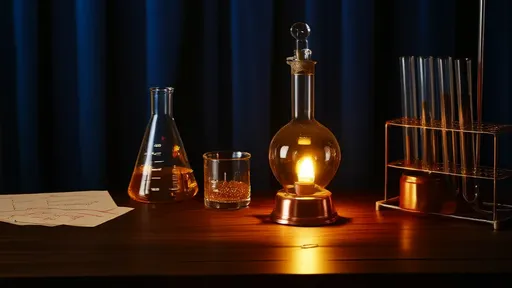
There is an alchemy to the perfect candlelit dinner that transcends mere decoration or illumination. It is an intricate dance of physics, chemistry, and human perception, all conspiring to create an atmosphere of warmth, intimacy, and romance. While we often focus on the menu, the music, or the company, the very quality of the light we dine by plays a profoundly underappreciated role in setting the stage for the evening. The flicker of a flame does more than just push back the darkness; it paints the room with an emotional palette, and the master key to understanding this phenomenon lies in a concept known as color temperature.
At its most fundamental level, a candle flame is a marvel of combustion chemistry. The warm, gentle light we see is the visible result of a process called incandescence. As the wax—typically a hydrocarbon like paraffin or stearin—melts, travels up the wick, and vaporizes, it reacts with oxygen in the air. This reaction creates heat, which excites the unburned carbon particles (soot) within the flame to incandescent glory. These tiny, superheated particles glow, emitting light across a spectrum, but with a pronounced intensity in the red, orange, and yellow wavelengths. This is the origin of the classic warm glow we associate with firelight. The specific shade of this glow, its warmth or coolness, is quantified as its color temperature, measured in Kelvin (K).
The Kelvin scale might seem counterintuitive at first. Unlike our common association of red with heat and blue with cold, lower Kelvin values correspond to warmer, redder light, while higher Kelvin values describe cooler, bluer light. The flame of a standard dinner candle burns at a remarkably low color temperature, typically residing between 1,800K and 2,200K. To put this in context, a warm white household LED bulb might be rated at 2,700K, and direct sunlight at high noon measures around 5,500K. This exceptionally low value is what gives candlelight its signature rich, honeyed, and comforting hue. It is the visual equivalent of a warm embrace.
This warm color temperature is not merely a physical measurement; it is a powerful psychological trigger. Human beings have evolved over millennia with fire as a central part of our existence—for warmth, for protection, for cooking, and for community. We are hardwired to find the warm light of a flame inherently soothing, safe, and intimate. Psychologically, light at the 1800-2200K range stimulates a sense of comfort and relaxation. It slows our pace, lowers inhibitions, and encourages conversation. It is the antithesis of the harsh, high-Kelvin fluorescent lighting of an office or supermarket, which is designed for alertness and task-oriented focus, not for lingering over a meal and wine.
Furthermore, the warm spectrum of candlelight is exceptionally flattering to human skin tones and the presentation of food. The abundance of red and yellow wavelengths softens features, minimizes imperfections, and imparts a healthy, rosy glow to complexions. This subconscious enhancement makes everyone appear more attractive and vibrant, undoubtedly contributing to the romantic potential of the evening. On the table, this same light enriches the colors of food. A deep red wine appears more profound, roasted meats look more succulent, and golden sauces glisten with an almost magical quality. It appeals directly to our primal appetites, making the meal itself more visually appealing and satisfying.
But the magic of candlelight is not solely in its color temperature; it is also in its dynamic nature. Unlike the sterile, constant emission of an electric bulb, a flame is alive. It flickers, dances, and breathes. This subtle, unpredictable movement creates a play of light and shadow across the room that is endlessly fascinating. This flicker rate, often between 5 and 30 Hertz, is slow enough to be perceptible but fast enough to avoid being a distraction. This dynamic quality prevents the visual monotony that static lighting can create, adding a layer of visual texture and depth to the environment. It captures our attention on a subconscious level, making the space feel more alive and the experience more engaging.
To truly harness the chemistry of ambiance, one must become a curator of flames. Not all candles are created equal, and their construction directly impacts the quality of light. The choice of wax is paramount. Paraffin wax, a petroleum byproduct, burns cleanly and brightly but can sometimes produce a slightly brighter, less nuanced light. Natural waxes like beeswax and soy are the connoisseur's choice for ambiance. Beeswax, in particular, is the gold standard. Its flame burns at the lower end of the color temperature spectrum, emitting a deep, sunny, golden-yellow light that is incredibly rich and warm. It also burns cleaner, producing a faint, naturally sweet aroma reminiscent of honey. Soy wax also burns cooler and cleaner than paraffin, offering a very soft, warm light excellent for creating a relaxed atmosphere.
The role of the wick is equally crucial in the chemistry of the flame. A properly sized wick, often braided cotton or paper-cored, ensures a complete and efficient burn, minimizing smoke and soot while providing a steady, upright flame. A poorly chosen wick can lead to flickering, tunneling, or smoking, which disrupts the ambiance and can release unburned carbon particles that dull the air quality. For the purest light and most consistent burn, trimming the wick to about a quarter of an inch before each lighting is a simple yet effective ritual. This small act ensures a sharp, defined flame that burns efficiently at its ideal color temperature.
While the candle itself is the source, its placement is the art of distribution. The goal is to create a layered, pooled lighting effect that defines intimate zones of light within the larger darkness of the room. A single candle on a table creates a focused, intimate bubble for two. Groupings of candles of varying heights—using candlesticks, votives, and tealights—create a captivating landscape of light that draws the eye around the table and adds dimensional interest. This avoids a flat, uniform look and instead sculpts the space with light and shadow. Placing candles strategically around the room, on sideboards or mantels, helps to raise the ambient light level slightly without sacrificing the warm, low-temperature quality or introducing harsh electric light. The reflection of flickering flames in glassware, silverware, and mirrors multiplies the effect, adding sparkle and movement to the periphery.
For the modern host, understanding this interplay allows for intentional curation. Perhaps the evening calls for the pure, classic gold of unscented beeswax pillars for a formal, timeless feel. Maybe a more casual gathering is enhanced by the softer glow of soy votives clustered together. The key is to avoid candles with added dyes that can alter the light's color, or overpowering synthetic scents that can clash with the aroma of food and wine. The most sophisticated ambiance relies on the pure, unadulterated chemistry of a clean flame. Dimming electric lights is not enough; their color temperature, even when dimmed, remains fundamentally different from the organic warmth of fire. The unique combination of a 1900K light source and its inherent flicker is impossible to replicate digitally with full authenticity.
In the end, crafting the perfect candlelit dinner is an exercise in applied science and sensory artistry. It is about recognizing that the humble candle is not just a source of light, but a precise instrument for crafting mood. By understanding the chemical principles that give candlelight its warm color temperature and dynamic flicker, we can move beyond simple decoration and intentionally engineer an atmosphere. We can create an environment that taps into deep-seated human instincts for comfort and connection, that flatters our guests and beautifies our food, and that transforms a simple meal into a memorable, multisensory experience. So the next time you plan an evening, consider the chemistry on your table. The right flame, understood and deployed with purpose, is the most powerful ingredient in your recipe for ambiance.

By /Aug 27, 2025

By /Aug 27, 2025
By /Aug 27, 2025
By /Aug 27, 2025

By /Aug 27, 2025
By /Aug 27, 2025
By /Aug 27, 2025

By /Aug 27, 2025

By /Aug 27, 2025

By /Aug 27, 2025

By /Aug 27, 2025

By /Aug 27, 2025

By /Aug 27, 2025

By /Aug 27, 2025

By /Aug 27, 2025

By /Aug 27, 2025

By /Aug 27, 2025

By /Aug 27, 2025

By /Aug 27, 2025
By /Aug 27, 2025
