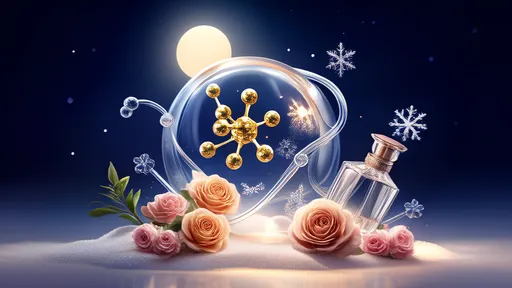
In the intricate dance of human attraction, scent plays a role far more profound than we often acknowledge. Beyond the immediate pleasure of a fragrant bouquet or the comforting aroma of a familiar space, lies a complex chemical language that whispers directly to our primal instincts. This is the world of perfume molecules, where pheromones and aromatic compounds intertwine to create what can only be described as the chemistry of love. The very essence of this interaction challenges our understanding of romance, suggesting that our hearts may be guided by noses more than we realize.
The journey into this olfactory realm begins with understanding the basic building blocks. Perfumes are not merely simple scents; they are elaborate cocktails of volatile organic compounds, each with its own character and evaporation rate. Top notes provide the initial impression, often citrus or light floral molecules that evaporate quickly. Heart notes form the core of the fragrance, while base notes—typically richer, deeper aromas like musk or amber—linger longest on the skin. But beyond this structural complexity lies something even more fascinating: the potential presence of pheromones, those elusive chemical messengers that can trigger social responses in others.
Pheromones themselves are a subject of both scientific rigor and popular fascination. These chemical signals, secreted outside the body, are detected by the vomeronasal organ in many animals, triggering innate behaviors related to mating, territory, and alarm. In humans, the existence and functionality of this organ remain debated, yet evidence suggests we are not entirely immune to chemical communication. Studies have indicated that certain compounds found in human sweat, like androstadienone and estratetraenol, may influence mood, attraction, and even physiological responses in others, albeit subtly and often subconsciously.
The intersection of perfumery and pheromone science is where the magic—or rather, the chemistry—of attraction is amplified. Perfumers, both ancient and modern, have intuitively incorporated ingredients known to have pheromone-like effects. Natural musks, originally derived from animal glands, and synthetic analogues like galaxolide, are prized not just for their warm, sensual base notes, but for their ability to cling to the skin and interact with body chemistry. These molecules do not shout of attraction; they murmur it, creating an aura that is uniquely personal and irresistibly intriguing.
But how does this translate to the experience of love and attraction? Imagine a scenario where two people meet. Visually, they are drawn to each other; conversation flows easily. Yet, beneath this conscious interaction, their olfactory systems are engaged in a silent dialogue. The subtle scent signatures each person carries—a blend of their natural pheromones, diet, health, and yes, their chosen perfume—are being subconsciously assessed. This chemical conversation can foster a sense of comfort, familiarity, or even arousal, paving the way for deeper emotional connections. It is not that scent alone determines love, but it certainly sets the stage, acting as an invisible thread that can draw people closer.
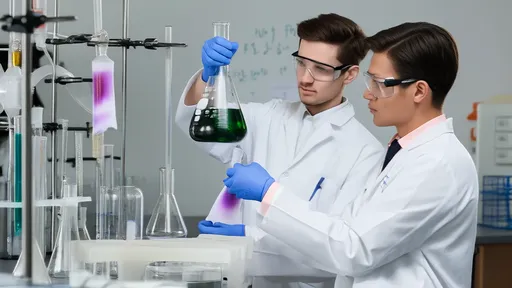
The art of perfumery has evolved to harness this chemical potential with increasing sophistication. Modern fragrance houses invest heavily in research, using gas chromatography and mass spectrometry to isolate and identify key molecules that enhance appeal. They experiment with synthetic pheromones designed to mimic human chemical signals, creating fragrances that claim to boost the wearer's attractiveness. While the efficacy of such products is often marketed with more allure than evidence, the underlying principle is sound: scent is a powerful tool in the human mating dance.
Critics, however, urge caution. The human response to scent is highly individualized, influenced by cultural background, personal experiences, and genetic factors like the major histocompatibility complex (MHC), which plays a role in immune system compatibility and mate selection. What smells irresistible to one person may be neutral or even off-putting to another. This subjectivity means that no single pheromone-enhanced perfume can be a universal love potion. Instead, the true magic lies in the unique chemical fingerprint that arises when a perfume interacts with an individual's skin chemistry—a alchemy that cannot be mass-produced.
Beyond the initial spark of attraction, scent also plays a crucial role in bonding and memory. The olfactory bulb has direct connections to the amygdala and hippocampus, brain regions central to emotion and memory. This is why a particular fragrance can instantly evoke a vivid memory or a strong emotional response from years past. In romantic relationships, partners often come to associate each other's natural scent with comfort and security, strengthening their bond. Perfumes worn during significant moments can become anchors for cherished memories, making scent an enduring element of love's tapestry.
Looking forward, the fusion of biotechnology and perfumery promises even more personalized approaches. Imagine fragrances crafted based on an individual's genetic profile, designed to complement their natural pheromone signature and appeal to specific preferences. While this may sound like science fiction, advances in genomics and synthetic biology are bringing us closer to such possibilities. The future of love's chemistry may well be found in a bespoke bottle, tailored to enhance one's unique allure.
In conclusion, the relationship between perfume molecules, pheromones, and love is a captivating testament to the complexity of human attraction. It is a realm where science and art converge, where ancient instincts meet modern innovation. While we may never fully unravel the mysteries of why we fall in love, it is clear that our noses play a pivotal role in guiding our hearts. So the next time you spritz on a favorite fragrance, remember: you are not just wearing a scent. You are engaging in a ancient chemical dialogue, one that has whispered the secrets of attraction for millennia.

By /Aug 27, 2025
By /Aug 27, 2025
By /Aug 27, 2025
By /Aug 27, 2025

By /Aug 27, 2025
By /Aug 27, 2025
By /Aug 27, 2025

By /Aug 27, 2025
By /Aug 27, 2025
By /Aug 27, 2025

By /Aug 27, 2025
By /Aug 27, 2025

By /Aug 27, 2025
By /Aug 27, 2025

By /Aug 27, 2025

By /Aug 27, 2025
By /Aug 27, 2025
By /Aug 27, 2025
By /Aug 27, 2025
By /Aug 27, 2025
